




02.05.2012
Viennese Cowboy in the Middle East
Click here for the Hebrew version
The two brown horses gallop lightly on the famous Viennese Ringstrasse. Calmly, ignoring all the cars driving by, from left and right. “This part is called Karl-Lueger-Ring, after the former Mayor, who happened to be a big Anti-Semite. Last week I heard that the city is going to rename it – justified I must say”, the carter explains, surprisingly in Hebrew! Well, not an academic Hebrew, “but good enough for the kitchen”, he admits.

30.04.2012
Israel’s former spymasters double cross their former masters
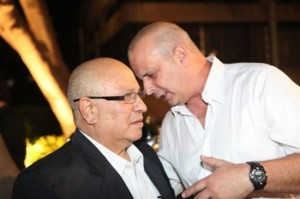
It’s hush-hush no more. Former spymasters are coming out of the woodworks to spook the current government into not attacking Iran.
First it was Meir Dagan, the “superhero” Spymaster from the Mossad, who, as soon as he left the service, launched a campaign against Prime Minister Benjamin Netanyahu and Defense Minister Ehud Barak – over the issue of attacking Iran’s nuclear facilities. In his own words, Dagan says that a military attack on Iran’s nuclear facilities is the “stupidest thing I’ve ever heard.” He also says that he has no faith in Netanyahu and Barak’s ability to lead the country into such a fateful decision.
And now comes Yuval Diskin, the former head of the internal spy service, the Shin Bet. In YouTube videos released over the weekend, the former security chief goes one up on even Dagan’s scathing criticism of the Israeli leadership.
In the videos, Diskin makes the following main points:
1. The current Israeli government has no interest in negotiating with the Palestinian Authority because PM Netanyahu knows that if he makes even the slightest compromise or move toward the Palestinians that his erstwhile stable coalition will implode.
2. Anything else the government says about this issue is rubbish. Don’t believe the spin coming from Jerusalem that there is no partner on the Palestinian side. It’s true, says Diskin, I’ve been there and I’ve seen this government up close. READ MORE
25.04.2012
What you need to know about Israel @ 64
On Thursday we celebrate Israel’s 64th Independence Day.
I will leave it to others to expound on Israel’s wonderful achievements over the past 64 years. There are plenty of examples, and many people are doing great things to shore up our morale and show our positive side. We indeed have a wonderful country, a miracle really, a dynamo which thrives on adversity and intensity. We are unique in the world, and I love my country very much. It is because of this love, and because I believe that my job as a journalist is to point out the cracks in the system, the things that need fixing, I will rather give you my analysis of some of the important things that I think you need to know if you are to make informed decisions regarding your life here. Furthermore, it is quite likely that we will have general elections here before next year’s 65th Independence Day, and if elections are to be held, and you plan on voting, which I hope you do, you should make an informed choice.
Our governments – and here I’m talking about all our past governments not just the current one – are unable to plan and execute long-term strategic national projects. About 70% of the government’s decisions are not carried through and implemented. There is a huge amount of populist legislation, tons of bureaucracy, foot-dragging, empty promises, lack of accountability, lack of oversight, nepotism and corruption. Year after year, our State Comptroller publishes reports showing vast amounts of incompetence, corruption and waste; and worst of all, non-implementation of previous reports. We, the citizens of Israel, continue to not hold our authorities responsible. This is our political culture; these are the men and women who staff our halls of power. We put them there, and we must demand more of them. As you look at the political parties on offer for the next elections, look for parties and politicians who have a record of getting things done, of honest, hard legislative work, and stay away from politicians who are just full of hot air. READ MORE
25.04.2012
Yom Hazikaron 2012
On this day, we commemorate the 22,993 fallen Israeli soldiers, and thousands of Israeli Terror victims, who lost their lives for the sake of the State of Israel.
I took upon myself to free-translate a poem, written by Giora Fischer, who lost his son Merom (Moses) during a military operation in Jenin in 2002.
The hebrew version:
תְּפִילָה/ גיורא פישר
מִי יִתֵּן
וְאֶהְיֶה כְּבָר זָקֵן
מְבֻלְבָּל.
אִם אָז אֶשְׁאַל:
לָמָּה הוּא לאֺ בָּא לְבַקֵּר?
אַל תּאֺמְרוּ:
אֲבָל, הוּא נָפַל
לִפְנֵי הֲמוֹן זְמַן.
אִמְרוּ:
הוּא הָיָה פֺּה אֶתְמוֹל
וְאָמַר שֶׁיָּבוֹא גַּם מָחָר.
The english version (free translation):
Prayer/Giora Fischer
If only
I am already old,
confused.
If then I asked:
Why didn’t he come to visit?
Don’t say:
But, he has fallen
long ago.
Say:
He was here yesterday,
and said he would come tomorrow again

CATEGORIES: Uncategorized
23.04.2012
Koschere Betriebswirtschaft in Wien
/
Im noblen 19. Bezirk, im friedlich-beschaulichen Wien-Döbling, liegt eines der schönen barocken Winterschlösschen von Kaiserin Maria Theresia. Doch statt Touristen sieht man in dem gepflegten Schlossgarten nur Studenten, denn hier befindet sich heute der Campus der Lauder Business School.
Gegründet 2003 von Ronald S. Lauder, dem ehemaligen US-Botschafter und Präsidenten des World Jewish Congress, werden hier junge jüdische und nichtjüdische Studenten aus aller Welt zu Führungskräften ausgebildet. Das Seminarprogramm der Fachhochschule richtet sich nach den jüdischen Feiertagen, und jüdische Studenten haben die Möglichkeit, im Rahmen eines Stipendiums auf dem Campus zu wohnen und in der koscheren Mensa zu essen, wenn sie das außerakademische JLP (Jewish Learning Program) besuchen und Hebräisch als Fremdsprache wählen.
Die beiden akademischen Säulen der Lauder Business School sind der Bachelor-Studiengang Intercultural Business Administration (BA), der sich über sechs, und der Master-Studiengang Intercultural Management & Leadership (MA), der sich über vier Semester erstreckt.
Interkulturell Die Studienschwerpunkte sind nach Aussage der Hochschule interkulturelle Kompetenz, Forschung und Personalführung. Gemäß dem Goethe-Zitat »Zwei Dinge sollen Kinder von ihren Eltern bekommen: Wurzeln und Flügel« erhalten die Studenten sowohl einen aktiven Einblick in die jüdische Lebenswelt als auch einen akademischen Einblick in die interkulturellen Aspekte von Lebens- und Unternehmensführung.
Jeder Schabbat, sowie alle Feiertage, die innerhalb des akademischen Kalenders liegen, werden auf dem Campus gemeinsam begangen. Das Wohnheim verfügt über Ein- und Mehrbettzimmer mit gemeinschaftlicher Küche sowie Wasch-, Party- und Fitnessräumen. Wer ein Stipendium beantragen möchte, kann auf der Website der Business School weitere Enzelheiten erfahren.
Da der Unterricht in relativ kleinen Klassen von 20 bis 25 Studenten erfolgt, verspricht die Hochschule ein enges Verhältnis zwischen Professoren und Studenten – gerade im Hinblick auf individuelles Karriere-Coaching. Nach dem Studienabschluss dürfte den Absolventen also die Welt offenstehen. Die ersten Absolventen der noch relativ jungen University of Applied Sciences arbeiten heute zum Beispiel bei Apple, Google, JP Morgan, Exxon Mobile, Bank Austria, DHL oder im israelischen Tourismusministerium.
Wer jetzt gerade sein Abitur macht und sich für ein Studium an der Lauder Business School in Wien interessiert, sollte sich schnellstmöglich für das kommende Wintersemester 2012/13 bewerben, da in wenigen Wochen Bewerbungsschluss ist. Weitere Informationen über das Anmeldeverfahren finden sich im Internet.
23.04.2012
Analysis: Don’t panic over Egypt, yet
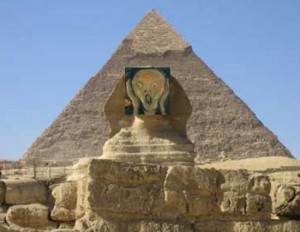
What does the future hold for the Israel-Egypt relationship? Will Egypt become increasingly, openly hostile? Will the Camp David Peace Accords between the two neighbors hold? Will Egypt provide diplomatic and security cover for Hamas in Gaza? How will the central government in Cairo, whoever it turns out to be, handle the growing lawlessness of the Sinai Peninsula?
These are just some of the important questions people are asking themselves regarding the important relationship between Israel and Egypt since the overthrow of the Mubarak regime. They are coming up again today as the Egyptian national gas company unilaterally terminated its contract with Israel.
The first, most pressing issue is the constant stream of terror from the Sinai, and its strategic implications for both countries. Sinai is three times the size of Israel. It is a vast badlands that is becoming a serious strategic headache for Israel. The central government in Cairo has lost control of the territory, which is now rife with armed Bedouin groups and Islamic fundamentalist cells. The two are mixing and influencing each other for the first time, and the result is noxious. The Bedouins have traditionally not been Islamic fundamentalists, and that could be changing. Israeli military intelligence has revealed that the IDF has thwarted about 10 terror plots being hatched in the Sinai. That’s a lot. Israel will find it increasingly difficult not to enter the Sinai in force and take care of the problem. But if Cairo doesn’t take care of the problem, we might have to. And that could lead to the dreaded confrontation between Israel and Egypt. This might even be what the various terror groups in Gaza and the Sinai are aiming for.
The peace treaty with Israel will not likely be abrogated, but the border will not be quiet. There are those who believe that it is inevitable that the Muslim Brotherhood and the Salafists take control over all Egypt. I wouldn’t rush into this conclusion. The Egyptian military has in its hands all of the powers of the Presidency, and the Parliament is not in control of the country yet. One of the main bones of contention now in Egypt between the military and the Islamists is over who will write the country’s new constitution. So far, the military has not allowed the Parliament to determine the nature of the new constitution, and it is unlikely that they will allow this in the future. In the impossible economic and diplomatic situation that Egypt finds itself in today, the military cannot allow the Islamists to create the conditions for an Islamic state governed by Sharia Law, devoid of tourism, development, international investment, and antagonistic to the West. READ MORE
18.04.2012
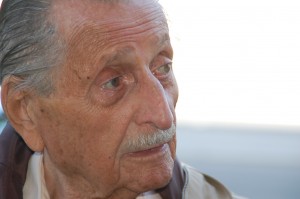
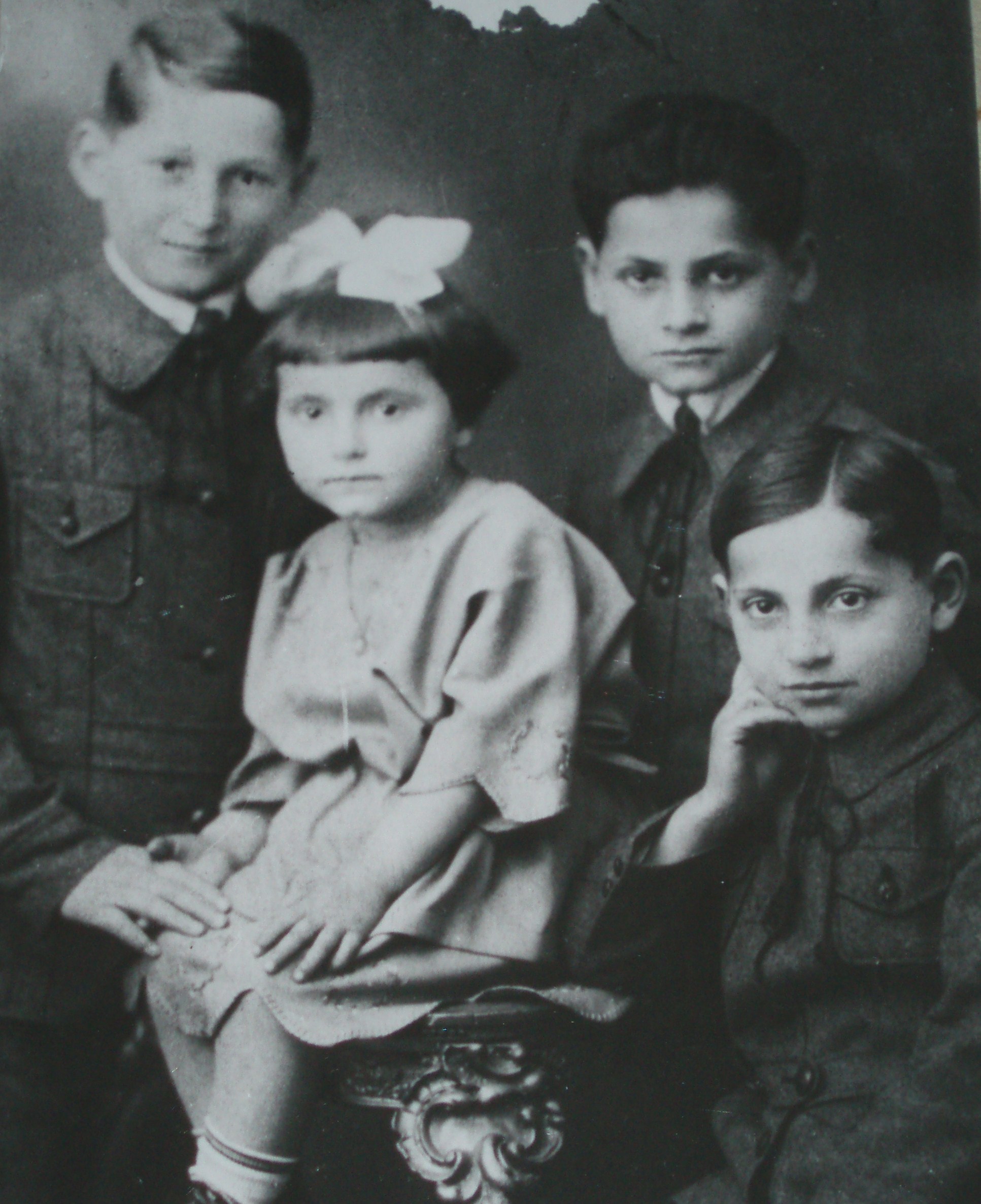
The amazing story of Marko Feingold
When I asked Marko ‘Max-Mordechai’ Feingold, the President of the Jewish Community in Salzburg, about his feelings after lying a “Stolperstein” carrying the name of another Nazi-victim, the old man just put his hands on the left chest, as saying: “my heart stops beating for a moment”. This was the 150th time his heart lacked this very heartbeat since he initiated the project in his hometown in 2005. Not the healthiest thing to do when you are a Holocaust survivor and you approach the age of 99. But Feingold does not care.
CATEGORIES: Documentation English Favored German Hebrew Offstage Politics Press Religion Uncategorized