CATEGORY: Social Culture
21.03.2012
Jewish winter Olympics in Slovakia
“So you are going to Slovakia to make a report about Jewish Winter Olympics in the mountains? Well, a kind of strange excuse for a winter vacation, Ian.”
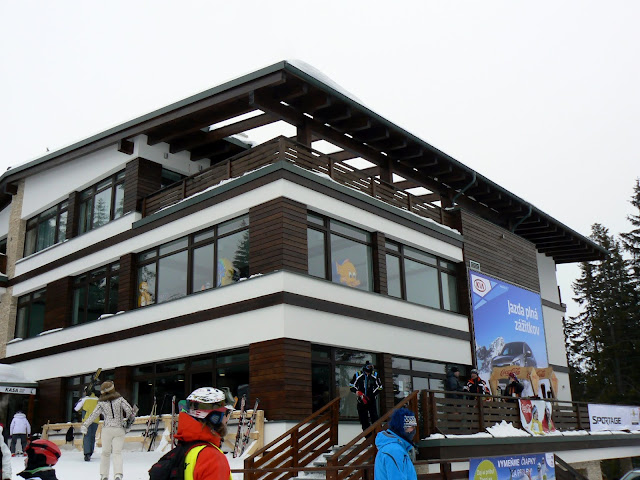
Indeed, why did I go at all? I never liked sports, I’m not any kind of sport reporter at all, I don’t really get fascinated by mountains, especially when it’s below -20 C. After all, I met some people from local Jewish communities already and wasn’t expecting to hear anything new. When a cog train brought me up to the place called Štrbské Pleso, which name I could hardly pronounce partially because of its frosty climate, my only wish was to hide myself in my hotel and magically reappear in another hotel some 800m away, where the games were taking place.
Maybe the reason why this event surprisingly became my warmest memory of this cold winter was the warm welcome and helpful assistance, which were offered to me by Petra Mullerova, a friendly and active young lady behind the whole organizational process of the Slovak Maccabi Games. Another reason might be the stunning beauty of the High Tatras, the mountain range surrounding the spot. The third segment is finally the home atmosphere of the the largest Jewish event in Slovakia, which seem to avoid any kind of formality or pomposity.
CATEGORIES: English Social Culture
20.03.2012
{PASSOVER BLINTZES} THICK & CREAMY CHEESE BLINTZES:
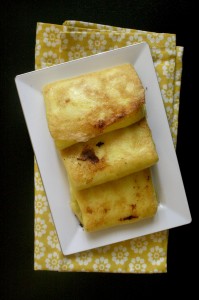
These blintzes are made up of light and fluffy crepes with a thick filling of cheese that make them delicious and impossible to stop at just one.
Ingredients for Crepe Batter:
18 eggs
3 cups of water
3 cups of potato starch
Ingredients for Cheese Batter:
4 containers of cottage cheese
3 eggs
3/4 cup of sugar
Directions:
Mix the Crepe batter ingredients together. Pour 1/3 cup of batter into a frying pan and cook the crepe until solid. Then flip it out of the frying pan onto a plate. Once you have cooked all the crepes, mix together the cheese batter ingredients in a large bowl. Fill the center with some of the cheese mixture, and fold over the sides to form a blintze. Repeat until all blintzes are formed. Heat up a frying pan and cook the blintzes. Serve with jam or sour cream.
~ Recipe submitted by Nina Safar
CATEGORIES: English Food Choices Kosher Recipes Social Culture
16.03.2012
Tel Aviv market a bonanza from ordinary to exotic (Chicago Tribune)
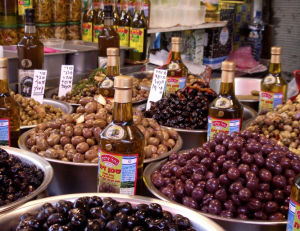
TEL AVIV — Visiting a food market in a far-flung destination is a great way to get a sense of the people who live there. Israel is no exception. The market in Tel Aviv, Israel’s largest city, showcases the small desert country’s agricultural innovations and the immigrant backgrounds of many Israeli residents.
Tel Aviv’s Carmel market, also known as Shuk Ha’Carmel, is close to the shore and a short walk down Allenby Street from the city’s hotel area. It’s part flea market, with vendors selling clothes, trinkets, cosmetics and cigarettes — there’s something quirky about seeing Camel cigarettes for sale in a place where you often see real camels — but mostly it’s a foodie haven of dried fruit, exotic spices, local olive oil, imported cheeses and fresh fish, meat and poultry. You also could spend your time dealing with the more immediate needs of an empty stomach by visiting stalls that sell persimmon smoothies, imported chocolates, mounds of colorful candies, fresh falafel, halva, lamb shawarma and borekas, the salty stuffed Turkish puff pastries that seem to be everywhere in Israel.
Tel Aviv chef Yair Feinberg, 35, gives market tours to travelers as part of his culinary business Fein Cook. He also offers cooking classes, specialty dinners and works on an Israeli television version of “Iron Chef.” Feinberg, the son of Argentine immigrants, grew up on a kibbutz in Israel’s Negev region and trained to be a chef at L’Institut Paul Bocuse in France. He later worked in several Michelin-star-receiving restaurants in Paris, Provence, France, and Tuscany, Italy, before returning to Israel in 2005.
It’s easy to wander the market alone and relish your solo discoveries. But a trip with someone like Feinberg can add insight and explanations about what you are seeing.
Take the giant lemons, for instance. After sampling some of the largest and juiciest clementines I’d ever tasted, I was convinced I was in the land of giant fruit when I came across what I was sure were the largest lemons I’d ever seen — about the size of a 16-inch softball.
CATEGORIES: Favored Food Choices Recipes Self made Short Story Social Culture
14.03.2012
Nachdenken über Ahasver (2)
Das Zimmer meiner Urgroßmutter war ein “geschlossenes Haus” – niemand hatte Zutritt und auch sie verlies es nur selten. Ihre Wanderung schien zu Ende zu sein, ihr Denken war ebenso eingeschlossen wie ihr Leib und scheinbar nichts konnte die Zitadelle aufbrechen, die Mauern niederreißen.
Als Kind, dessen Gedanken beginnen, sich selbständig und unabhängig von der Umgebung zu machen, gelang es mir einmal zu ihr vorzudringen. Ihr Zimmer schien das eines Messi zu sein, Kisten und Kartons stapelten sich bis unter die Decke, ein schmaler “Trampelpfad” führte durch das Chaos am Bett vorbei bis zum Fenster, wo eine Menora stand.
Ich entdeckte, dass das scheinbare Durcheinander gar keins war, sondern alles tatsächlich eine wohl durchdachte Ordnung hatte – meine Großmutter hatte einen kompletten Hausstand in ihrem Zimmer eingelagert: Geschirr, Bettwäsche, Werkzeuge, Papiere – alles war geordnet und nach Wichtigkeit in die Kisten und Kartons verpackt. Die Beschriftung ließ sie jedes Teil, falls es irgendwann gebraucht werden sollte, sehr schnell finden. Meine Urgroßmutter war bereit, jederzeit wäre sie in der Lage gewesen, aufzubrechen und irgendwo, ja, wo eigentlich, neu anzufangen. Mir wurde bewusst, das sie niemals aufgehört hatte, dass ihre Wanderung niemals zu Ende gegangen war, sie nur rastete. Das Bild – meine Urgroßmutter steht am Fenster und zündet, als es langsam dunkler draußen wird, die Kerzen der Menorca an, und ich frage sie, ob sie tatsächlich weit weggehen will irgendwann. Sie schaut auf mich herab und sehr beiläufig antwortet sie mit einer Gegenfrage: “Weit weg von wo.”
Niemals wieder ist mir so bewusst geworden, dass die Heimatlosigkeit und parallel dazu die Sehnsucht nach Heimat, tatsächlich das ruhelose Wandern, wie es Ahasver bestimmt war, so sehr mit unserem Volk verknüpft ist, ja, es eine psychosoziale Komponente unseres Seins darstellt. Sie ist angelegt in unseren Gebeten, in den Regeln, nach denen wir, ohne nach der Richtigkeit dieser Regeln zu fragen, selbstverständlich leben – in der Diaspora und “ba ha aretz”, wir alle nehmen es hin und versuchen uns einzurichten – für den Moment, egal, wie lange er andauern mag. Esoterische Erklärungsversuche greifen ins Leere und auch die schöne Formulierung – “Heimat finde ich nur in mir” – gibt nur unzureichend wieder, was das Wandern, die Diaspora für uns bedeutet.
Stellen wir nicht unseren Alltag immer in Frage, wenn wir dieser Sehnsucht und dieser Rastlosigkeit latent nachgeben? Sind wir alle Ahasver, auch, wenn wir ‘angekommen’ sind, uns eingerichtet haben in einer Fremde? Welches Gewissen plagt uns, uns nicht auf die Sozialisation einzulassen, die wir doch irgendwie gewählt haben, wir uns aber in unterschiedlichen Ausprägungsgraden weigern letztendlicher, absoluter Teil davon zu sein? Wir übernehmen vielleicht gerade daher so gern gesellschaftliche Verantwortung, weil wir stets einen gewissen Anteil an Distanz bewahren, unser Bewusstsein eben nicht vom sozialen Sein realiter bestimmt wird?
CATEGORIES: Religion Social Culture Uncategorized
14.03.2012
Albert Einstein (* 14. März 1879 in Ulm; † 18. April 1955 in Princeton, New Jersey ) ist heute vor 133 Jahren geboren.
CATEGORIES: Documentation Favored Film German Jews-News Press Skills Social Culture Video
12.03.2012
Please watch this, do something and share it !

CATEGORIES: Documentation English Film Politics Press Social Culture WTF
12.03.2012
From Tel Aviv to Austin: Israeli bands, techs and reps make big impact on SXSW 2012

Most Americans think of Israel as the cradle of civilization, a country stuck in the ancient past.
But what few of us realize is that, in addition to the historical landmarks, Israel also has the largest number of per-capita government and private sector investments in Research and Development and number of engineers in the world. Technology is one of Israel’s most developed sectors, hosting IBM, Microsoft, Intel and Motorola’s largest R&D facilities outside the United States.
Now, 75 of Israel’s leading creatives and innovators are traveling over 7,000 miles to join the throngs of attendees at this year’s SXSW during the music, film and interactive portions in a program they call “i: Made in Israel.” With a strong, identifiable presence at the conference, Americans can get a taste of the exciting developments happening in the technology and performing arts sectors of Tel Aviv.
Meetings, deals and demos will take place March 12 – 15 at the “Beachside Cafe” inside the SXSW Tradeshow. This “idea bar” will feature tables with full coffee service and an opportunity to meet with the 30 Israeli startups in attendance at the festival as well as listen to live music from the seven Israeli bands in attendance at SXSW.
The bands — which range from the metal-rock sounds ofI.U.D.M. to the Latin electronica of DJ Erez Ben Ishay to the singer/songwriter sound of Yael Kraus — will have additional unofficial showcases throughout the city during the festival, but will always be on the schedule at the “i: Made in Israel” events.
On Friday, March 16, “i: Made in Israel” will throw an official SXSW “Tel Aviv Beach Party” at Brush Park, across the street from the Convention Center. This is your chance to see full sets from the bands who will play throughout the day, and folks can relax under cabanas while stretching out on beach loungers. Beach-themed drinks and Israeli snacks and games will create the feel of bringing the Israeli culture to Austin.
Six Israeli companies will also partake in the Austin International Technology Summit at the Palm Door on Mar 10. Austin tech companies will meet with delegates from 12 different countries to discuss the use of technology in economic development. Besides Israel, representatives from France, Singapore, Germany, Ireland, The Netherlands, The United Kingdom, New Zealand, Spain, Brazil, Japan and Canada.
CATEGORIES: English Jews-News Music Social Culture WTF
12.03.2012
SNIPPET from the upcoming album: JEWDYSSEE 5773!
SUPPORT YOUR LOCAL ARTISTS. Start your Jewdyssee.
11.03.2012
Israeli Actress Odeya Rush will play the young version of Angelina Jolie in the upcoming movie ‘Maleficent’

CATEGORIES: English Social Culture
11.03.2012
ADON OLAM FEAT. BEN SALOMO
ADON OLAM, ASHER MALACH, B’TEREM KOL Y’TZIR NIVRA. L’ET NA’ASAH V’CHEFTZO KOL, AZAI MELECH SH’MO NIKRA. V’ACHAREY KICHLOT HAKOL, L’VADO YIMLOCH NORA. V’HU HAYA, V’HU HOVEH, V’HU YIH’YEH B’TIFARA. V’HU ECHAD, V’EYN SHENI L’HAMSHIL LO, L’HACHBIRA. B’LI REISHIT, B’LI TACHLIT, V’LO HA’OZ V’HAMISRAH.
MASTER OF THE UNIVERSE THE LORD OF THE UNIVERSE WHO REIGNED BEFORE ANYTHING WAS CREATED. WHEN ALL WAS MADE BY HIS WILL HE WAS ACKNOWLEDGED AS KING. AND WHEN ALL SHALL END HE STILL ALL ALONE SHALL REIGN. HE WAS, HE IS, AND HE SHALL BE IN GLORY. AND HE IS ONE, AND THERE’S NO OTHER, TO COMPARE OR JOIN HIM. WITHOUT BEGINNING, WITHOUT END AND TO HIM BELONGS DIMINION AND POWER.
CATEGORIES: 5773 Art Favored German Hebrew JDSSEE INSIDE Music Skills Social Culture Yiddish